As I've complained about these little garden devils so much this year I thought I may as well do a post about them. They do make good photographic subjects as they don't move very quickly.
Snails belong to a group of organisms known as Gastropods, which means 'stomach foot'.Common snails have pale grey moist skin. Because of their moist skin, common snails are most active in damp weather and at night.

At the front end are four tentacles, the shorter two are for feeling and the longer pair are eye stalks. The shell of these snails is light brown with darker brown bands following the spiral of the shell. The shell colouration varies in its intensity from pale yellow to almost black.

They are herbivores and feed on decaying vegetation, algae, fungi, lichens and garden plants. Common snails have a symbiotic bacteria in their crop that enables them to digest cellulose - they have been known to feed on damp paper and cardboard.

When conditions become too dry, the snail will retreat into its shell and seal the entrance with a parchment-like barrier known as an epiphragm. Snails can often be found in this state under rocks in gardens or on a wall in a sheltered corner. When sealed away like this the snail goes into a state of suspended animation and can survive for several months without water.
Common snails feed by scraping a ribbon-like tongue covered in horny teeth called a radula, over their food. This allows them to scrape algae and lichen from the surface of rocks and walls. You can sometimes see the trails they leave behind as they eat their way through the algae on a damp wall.

Common snails, like all land snails, are hermaphrodites. Despite this they still need to find another snail to mate with. When two snails meet during the breeding season (late spring or early summer), mating is initiated by one snail piercing the skin of the other snail with a calcified 'love dart'. The exact purpose of the 'love dart' is not fully understood but it seems to stimulate the other snail into exchanging small packets of sperm. After mating is complete the snails will produce eggs internally, which are fertilised by the sperm that has been exchanged. Eggs are then usually laid in clusters (each containing up to 100 white eggs) into the soil or under rocks. If the conditions remain suitable for the eggs, snails will begin to hatch after about 14 days. Newly hatched snails have a small fragile shell and it takes two years for them to reach maturity.
The gypsies believe that the "Earth-fairies" are the foes of every kind of worm and creeping insect with the exception of the snail, which they therefore call the earthy-horse. English gypsies, and the English peasantry, as well as gypsies, call snails "cattle", because they have horns. A girl can win love from a man by inducing him to carry a snail shell which she has had for some time about her person.

To present a snail shell is to make a very direct but not very delicate declaration of love to any one. When I think of the number of snail shells in my garden I guess my garden loves me!
 green thumb sunday


 though the garden is holding up quite well...still a fair amount of colour
 and the Chrysanthemum is in full blooom now...
 Although the weather was prettty gloomy.....
 we couldn't laze around all day.................
 so we went out Sloe hunting....we found rose hips and Campion.....
 plenty of Fungi......
 fallen trees to walk along.........
 Ahhh here are the Sloes...
 We picked 320 Sloes...we know that's exact as Melissa counted them all!!!!!......
 Then it was all hands to deck when we got home to make the Sloe Gin....
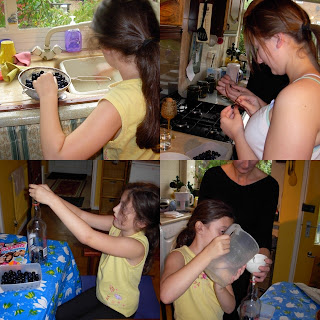 I'll give it a good shake everyday and just before Christmas Melissa will take some home to leave out for Santa on Christmas Eve..........


 there were far more willing
  to transform it to this...........................


 My indoor plant Curcuma never came back this year.....these are photos from last year
 My Bourgainvillea last year...............


 It used to be known as haemanthus, from the greek words haima (blood) and anthos (flower). two of it's common names are Blood Flower and Catherine Wheel. It's not frost hardy so I've grown mine in large pots and I'll overwinter them somewhere frost free. In fact because it was starting to flower and our weather was so wet I brought the pot indoors and stood it on the windowsill so I could see it and enjoy the flowers.